The Regrowth Reality Check: How to Measure Thinning Hair Without Falling for Hype
Here’s the uncomfortable truth about thinning hair: most of us judge progress with the least reliable tool in the bathroom — our own eyes on a random Tuesday. One day the part looks wider, the next day it looks fine, and by Friday we’re convinced a new serum is either a miracle or a scam. That is not evidence. That is mood lighting with a side of anxiety.
At Revolumed, we are pro-hope but anti-hype. If you are going to spend money on thickening shampoos, scalp serums, or supplements, you deserve a way to tell whether anything is actually changing. The good news: you do not need a lab. You need a phone, a soft tape measure, a shower drain you’re willing to inspect, and 90 days of consistency.
Why your mirror is a terrible referee
Hair changes slowly. Your styling routine, the weather, how recently you washed, and whether you remembered to drink water can all change how thick your hair looks on any given day. A blowout can add visual volume. Dry shampoo can fake density at the roots. Even a slightly different part can make your scalp look fuller or thinner.
That does not mean those tricks are bad. It means they are not measurements. A real audit tries to answer one question: is the hair on your head changing in a way that would still be visible if you stripped away the styling?
The four-part baseline: do this in one afternoon
Start by setting a baseline before you change anything. If you have already started a product, that is fine — just begin now and treat today as day zero. You are not trying to prove a product works. You are trying to build a record honest enough to make a decision later.
You will track four things: standardized photos, ponytail circumference, wash-day shed count, and a simple weekly log. None of these is perfect on its own. Together, they are far more useful than a vibe check.
Standardized photos: same light, same angle, same hair
Take photos on the same day of the week, at the same time of day, in the same room. Use the same phone and the same camera position if you can. Prop your phone against something stable, or ask someone to take the shot from the same spot each time.
Capture three views: your natural part from above, your hairline from the front, and your crown from the back. Keep your hair dry and unstyled, or use the exact same simple styling routine every time. Label the photos by date. Do not zoom in and compare individual strands — that is how you drive yourself nuts. Compare the full set at day 0, day 30, day 60, and day 90.
Ponytail circumference: the low-tech tape measure test
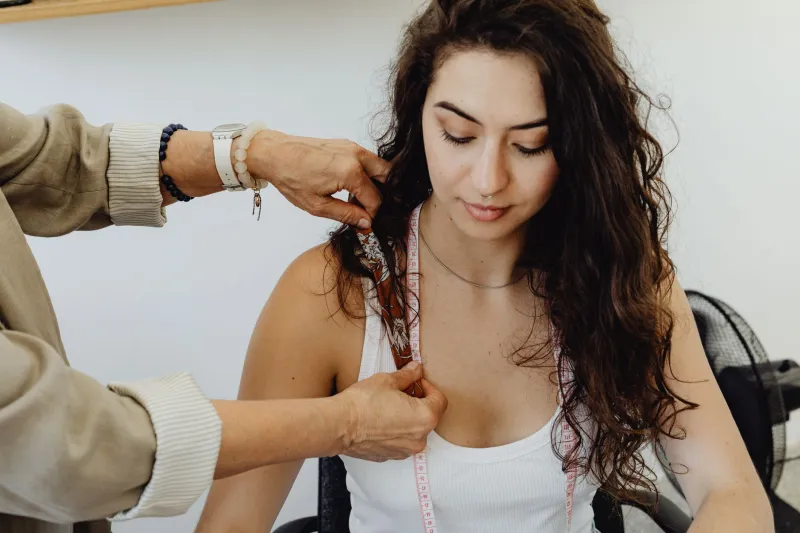
If your hair is long enough, gather it into a ponytail at the same spot on the back of your head each time. Use a soft tape measure and record the circumference in centimeters or inches. Do it three times and average the number. Small fluctuations are normal, especially if your hair is layered or slightly damp. The trend over 90 days matters more than any single reading.
This test is not useful for everyone. Short hair, very curly hair, and hair that breaks easily can make it inconsistent. If it does not work for you, skip it without guilt. The audit is a toolkit, not a religion.
Wash-day shed count: gross but useful
Most people shed somewhere around 50 to 100 hairs a day, and wash days can look scarier because those hairs have been sitting on your scalp. To track it, pick one wash day per week and count the hairs you see in the shower or on the drain after detangling. Yes, it is a little gross. Yes, it is also one of the most concrete numbers you can get at home.
Do not count every stray hair on your bathroom floor. Pick one consistent moment and stick to it. If your count spikes for a week after a stressful month or a new medication, note it. If it stays high for several weeks, that is a conversation for a dermatologist.
Your weekly log: what to record and what to ignore
Keep it short enough that you will actually do it. A notes app is fine. Record the date, your wash-day shed count, any scalp symptoms like itching or tenderness, and whether you started or stopped a product. Add one sentence about how your hair felt — not how it looked in a selfie.
Ignore influencer before-and-afters with different lighting. Ignore the friend whose hair grew two inches in a month. Ignore your own panic on a bad hair day. The log is there to protect you from your most dramatic moments.
How to judge shampoos, serums, and supplements
A thickening shampoo can make hair feel fuller temporarily by coating the strand or reducing frizz. That is a cosmetic effect, not regrowth. A scalp serum may support a healthier scalp environment, but it is not a magic fertilizer. Supplements are even trickier: in the US, they are not held to the same pre-market evidence standards as drugs, so labels can promise a lot with very little proof.
Give a new product a fair window — usually 60 to 90 days for hair — but decide in advance what would count as improvement. Would you need to see a smaller shed count? Less scalp visibility in your standardized photos? A bigger ponytail measurement? Write it down before you start. That is how you avoid moving the goalposts because you really wanted the product to work.
Red flags that mean stop experimenting and book a dermatologist
At-home tracking is not a substitute for medical care. Book a dermatologist if you notice sudden or patchy hair loss, scalp pain, redness, scaling, or inflammation, or if you are shedding noticeably more than usual for more than a few weeks. Also get checked if the thinning is accompanied by fatigue, unusual weight changes, or other symptoms that feel bigger than your hair.
If your part is widening quickly, if you can see distinct bald patches, or if you have a family history of hair loss and want to understand your options, do not wait 90 days to prove something to yourself. A dermatologist can look for causes that no shampoo will fix.
The 90-day verdict
At the end of the audit, sit down with your photos, numbers, and notes. Ask a boring question: is there a consistent, measurable change that survives the same lighting and the same styling? If yes, keep doing what you are doing. If no, you have permission to stop spending money on that product and try a different approach — or get professional input.
That is the whole point of the 90-day volume audit. It will not give you someone else’s hair. It will give you something better: a clear-eyed way to decide what is working, what is not, and when to ask for help.